The Skin You Grew Up With Isn’t the Skin You Have Now
Ask anyone their skin type and they’ll answer straight away. Oily. Combination. Dry. Usually it’s the answer they settled on at sixteen.
Then, somewhere in their forties, the moisturiser they’ve used for twenty years stops being enough. Their face feels tight by lunchtime. A serum they never had a problem with starts to sting.
Nothing changed in the bottle. Something changed in the skin.
Nobody Is Born Oily
Children’s skin produces very little sebum. At puberty, androgens switch the sebaceous glands on, and shine, congestion and breakouts follow. The skin type most people think of as permanent didn’t arrive with them. It arrived with their hormones.
Dermatologists build this into how they assess skin. The Baumann system, one of the most widely used skin typing tools, scores skin as oily or dry, sensitive or resistant, pigmented or non-pigmented, and wrinkle-prone or tight. Dr Baumann recommends reassessing your skin every year, because it shifts with age, pregnancy, menopause, climate and lifestyle.
Skin type isn’t a lifelong diagnosis. It’s a description of how your skin behaves right now.
Oil Follows Your Hormones
Sebum is driven by androgens, and men and women follow different curves. In men, testosterone keeps oil production largely stable until around their seventies. In women, sebum depends on adrenal androgens, which decline with age, and output falls sharply after menopause.
The drop starts earlier than most women expect. A Japanese study measuring forehead sebum found levels stayed steady between 18 and 40, then began to fall.
Two people with the same oily skin at 25 can have very different skin at 55. One may still be shiny by midday. The other may be dealing with dryness for the first time in her life.
A routine built to control oil can end up fighting a problem that no longer exists.
The Barrier Gets Slower
The outer layer of skin relies on a mix of lipids (ceramides, cholesterol and fatty acids) to hold water in and keep irritants out. With age, the skin gets worse at producing and maintaining them.
The tricky part is that older skin can look perfectly fine. A study in the Journal of Clinical Investigation compared adults in their 20s with people over 80. At rest, both measured normally. Under stress, the older skin broke down after 18 rounds of tape stripping, compared with 31 in the younger group, and took much longer to recover.
That’s why strong actives and frequent exfoliation at home cost more with age. The skin isn’t failing. It just takes longer to repair the damage.
Menopause: The Biggest Shift
If there’s one point where skin changes fastest, it’s menopause. Women lose nearly a third of their skin collagen in the first five years after menopause, and that loss is linked to years since menopause, not age itself.
Falling oestrogen also means less oil, less hydration and a weaker barrier. Skin feels drier, looks less firm, and starts reacting to products it handled for years. This isn’t just getting older. It’s hormones changing how the skin is built.
How Each Skin Type Changes
Everyone starts somewhere different, but the direction is the same: less oil, slower repair, more need for hydration.
Oily skin usually calms down, especially in women. Men tend to stay oilier for longer. The sebaceous glands don’t disappear. They tend to get larger with age, which is why enlarged pores and sebaceous hyperplasia (small, yellowish bumps) can appear even as the shine fades.
Combination skin loses its contrast. As the T-zone produces less oil, the difference between forehead and cheeks fades, and many people find their whole face feels dry by their fifties.
Normal skin often tips towards dry, as the barrier holds less water and recovers more slowly.
Dry skin usually gets drier, and can become thinner and more reactive as collagen and barrier lipids decline.
Different starting points. Same direction.
Not Everything Is Age
Adult acne. Breakouts don’t always end with your teens. In a 2025 study of 107 women with acne, 68% developed it for the first time after 25, and hormonal imbalances such as PCOS were common. Acne that appears or persists in adulthood is worth raising with your GP.
Isotretinoin (Roaccutane). This acne medication shuts oil production right down. In one study, some patients still had 30–80% less sebum up to 80 weeks after finishing treatment. Someone who was oily before can stay considerably drier long after.
Sensitive Skin Is a Different Question
Oily, dry and combination describe how much oil your skin produces and where. Sensitivity describes how it reacts: stinging, burning, itching, redness.
It’s also extremely common. A 2020 meta-analysis found 71% of adults report some degree of sensitive skin. Not all of them were born that way. A weaker barrier, too many products and stress can all make skin react more.
If something you’ve used for years suddenly stings, look at your routine and your barrier before blaming your skin.
Why Our Facials Are Built Around Stages
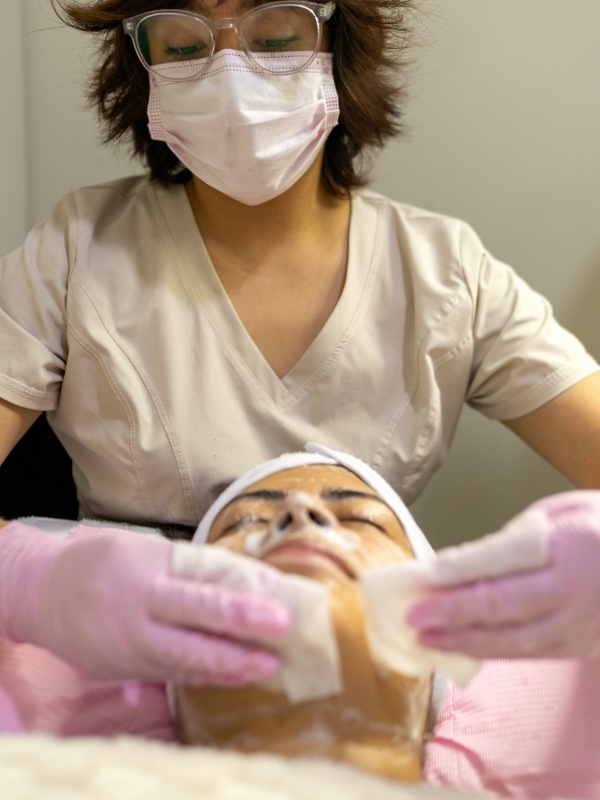
This is why our Skin Stage Facial System is organised by stage of life, not by the skin type you picked at sixteen. It isn’t just the treatments. Every product we use in a facial, from cleanser to serum to mask, is chosen for what skin at that stage needs:
30–45: hydration, radiance and the first signs of ageing.
45–60: firmness and lift as collagen loss speeds up.
60–75+: regeneration, structure and nourishment for drier, slower skin.
A 35-year-old and a 65-year-old won’t have the same products on their skin, because their skin isn’t doing the same job anymore.
Your age gives us a starting point, not a substitute for looking at your skin. A 50-year-old who is still oily won’t be treated as if she’s dry.
If you need help with your skin book a facial or a consultation with us at Skinportant Clinic. We’ll look at the skin you have today, not the one you used to have, and build an approach that fits it.