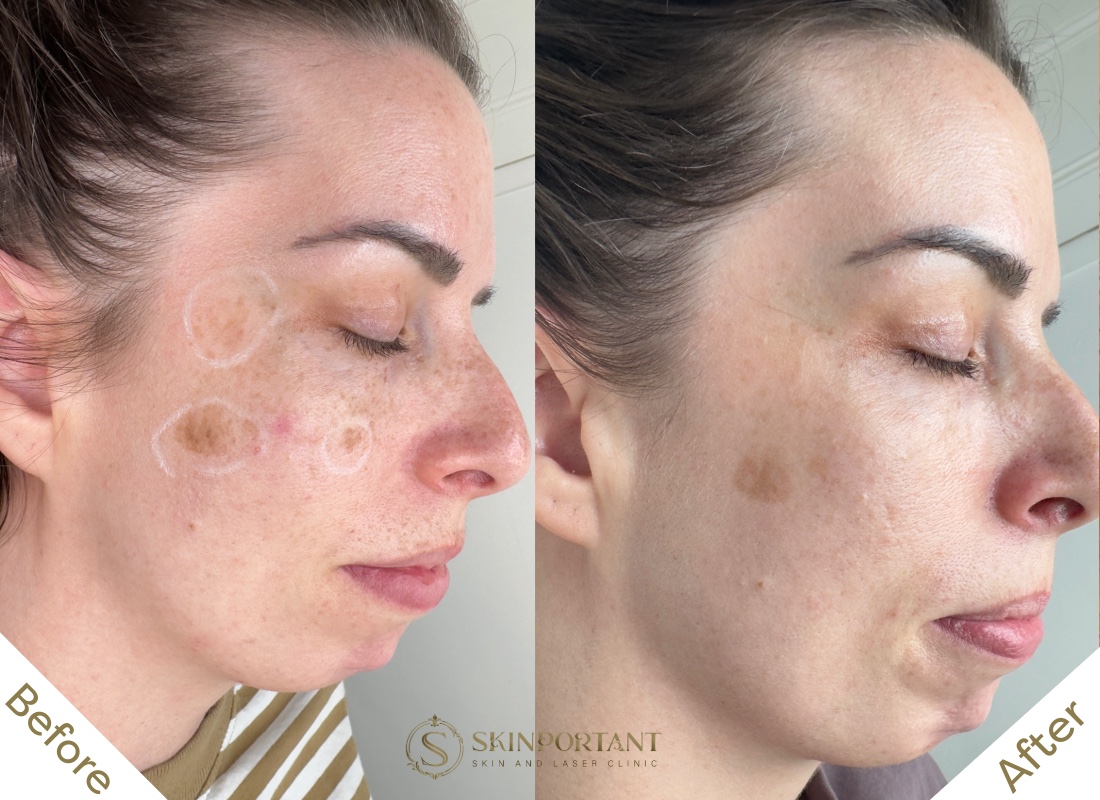
Pigmentation can develop for many reasons, including cumulative sun exposure, hormonal changes and the natural changes that happen to the skin over time. It can appear as individual dark spots, areas of uneven colour or a more general loss of an even skin tone.
At Skinportant, we use IPL (Intense Pulsed Light) to target unwanted pigmentation within the skin. The light energy is absorbed by the pigment, which is then gradually broken down and cleared by the body. The aim is not to remove every mark from the skin, but to reduce unwanted pigmentation and help the skin look more even.
Every pigmentation concern is assessed during a consultation before treatment. We look at the type and appearance of the pigmentation, your skin tone, sensitivity and previous treatments to determine whether IPL is suitable for you. Your treatment plan may also include Janssen home care and skin treatments between IPL sessions, as managing pigmentation is not just about treating the visible pigment.

Before your first IPL treatment, you'll have a thorough consultation and patch test. We assess your skin type and the pigmentation itself (its type, depth and likely cause), discuss what you want to achieve, and confirm IPL is the right approach for you. The patch test shows us how your skin and pigment respond before we treat the full area.
Before treatment begins, your skin is thoroughly cleansed to remove oil, makeup, SPF and any skincare products. This gives the light a clean surface to reach the pigment without interference. We then check the area for recent sun exposure, tanning or irritation, and confirm your skin is ready to treat.
Once your skin is prepared, treatment begins. The device delivers controlled pulses of light to the treatment area, targeting the excess melanin in the pigmented cells. The light is converted into heat, which breaks up the pigment so your body can gradually clear it. Settings are adjusted to your skin type and the pigmentation being treated for safe, effective results.
After IPL, your skin needs time to heal. The treated area may feel warm or appear slightly red, and the pigmentation can temporarily become darker before gradually fading over the following one to two weeks.
IPL targets the pigment already present in the skin, but pigmentation can develop again if the processes that trigger excess melanin production are not managed. This is why your home care and daily SPF are an important part of the treatment plan.
Once your skin has healed, we may also recommend a supporting Brightening and Pigmentation Facial between IPL sessions. These are optional, but can help maintain the skin and support your pigmentation treatment while you continue with your home care.