At Skinportant Clinic, we often see the same pattern: clients are careful about avoiding sunburn, yet still notice increasing pigmentation, loss of firmness, and fine lines that seem to appear “out of nowhere.”
The reality is that not all sun damage looks like sunburn. Much of it happens quietly, daily, and without any warning signs at all. To understand why, you need to understand the difference between UVA and UVB.
Two Types of Light, Two Very Different Problems
Ultraviolet radiation from the sun is not a single entity. It is made up of different wavelengths, and the two that matter most for your skin behave very differently.
UVB is the one most people recognise. It is the type of radiation that interacts with the very top layer of the skin. When exposure exceeds your skin’s tolerance, you see redness, inflammation, and eventually sunburn. It is immediate, visible, and uncomfortable. Because of this, people tend to respect it. They seek shade, apply sunscreen on holiday, and avoid prolonged exposure when they can feel the heat building.
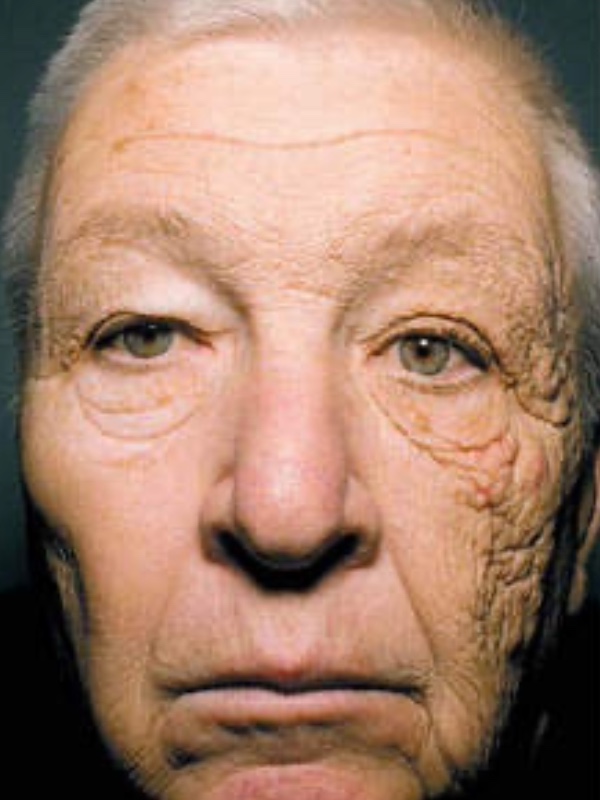
UVA, however, is far more deceptive. It penetrates much deeper into the skin, reaching the dermis where collagen and elastin live. These are the structural components that keep skin firm, smooth, and resilient. Unlike UVB, UVA does not cause an obvious warning signal. There is no redness, no heat, no discomfort. Instead, it works slowly, breaking down collagen fibres, disrupting cellular function, and accelerating the ageing process over time.
This is why many people who “never burn” still experience significant skin ageing.
Why UVA Is the Real Ageing Driver
If you were to isolate the main external cause of visible skin ageing, UVA would be at the top of the list. It is present all year round, not just in summer, and it remains relatively constant throughout the day. More importantly, it passes through clouds and even through glass.
This means your skin is exposed while driving, sitting near a window, or working in a bright office. The exposure may be low-level, but it is continuous. Over months and years, this repeated exposure leads to cumulative damage.
Collagen fibres begin to weaken and fragment. Elastin loses its ability to snap back into place. Pigment-producing cells become irregular, leading to uneven tone and dark spots. The skin gradually becomes thinner, less resilient, and slower to repair itself.
None of this happens overnight, which is why it is so often underestimated.
UVB: Still Important, But Not the Whole Story
While UVA is responsible for most visible ageing, UVB still plays a critical role in skin health. It is more intense during certain times of day and year, particularly in summer, and it is strongly associated with direct DNA damage in skin cells. This is why it is closely linked to skin cancer development.
UVB damage is easier to recognise because it is immediate. The skin turns red, feels hot, and signals clearly that something is wrong. In that sense, UVB is almost more honest. It tells you when you have overexposed your skin.
The problem is that many people rely on this visible feedback. If they are not burning, they assume their skin is safe. In reality, UVA continues to penetrate and damage the deeper layers regardless of whether the skin looks or feels affected.
The Misunderstanding Around SPF
This is where confusion often begins. SPF is widely used and heavily marketed, yet it only tells part of the story.
SPF primarily measures protection against UVB — the burning rays. It reflects how much longer skin can be exposed to UVB before showing redness under controlled conditions. It does not directly represent how well a product protects against UVA.
This creates a false sense of security. A high SPF number can suggest strong protection, but without adequate UVA coverage, the deeper processes that drive ageing can continue almost unchecked.
In the UK and Europe, UVA protection is indicated separately, often through a star rating or a “broad-spectrum” label. This distinction is critical, yet frequently overlooked by consumers.
Why Everyday Exposure Matters More Than Holidays
Most people associate sun damage with holidays, beaches, and hot weather. While these situations certainly increase UV exposure, they are not the primary driver of long-term ageing.
It is the small, repeated exposures that matter most. The short walk to the car. Sitting by a window. Running errands without protection. These moments seem insignificant on their own, but together they form a continuous pattern of exposure that gradually alters the skin.
This is why consistent daily protection is far more important than occasional heavy protection.
The Bigger Picture: Light and Skin Ageing
When we talk about skin ageing, it is not just about wrinkles appearing over time. It is a structural process driven largely by environmental exposure, particularly light.
UVA plays the leading role, but it does not act alone. Other forms of light, including visible light and infrared radiation, contribute to oxidative stress within the skin. This creates free radicals that further accelerate collagen breakdown and impair the skin’s natural repair mechanisms.
The skin is constantly balancing damage and repair. When exposure outweighs the skin’s ability to recover, visible ageing begins to accelerate.
The Skinportant Clinic Perspective
From a professional standpoint, the difference between UVA and UVB is not just academic — it directly affects how skin ages, how treatments perform, and how long results last.
Clients who protect their skin consistently, even in low-exposure environments, maintain stronger collagen, more even tone, and better overall skin quality over time. Those who rely only on avoiding sunburn often find themselves dealing with pigmentation, loss of firmness, and dullness much earlier than expected.
The goal is not to avoid the sun completely, but to understand how it affects the skin and manage that exposure intelligently.
Final Thought
UVB damage is immediate and visible, which makes it easier to respect. UVA damage is slow, silent, and cumulative, which makes it far more dangerous in the long term.
If you are only protecting your skin when you feel the sun, you are already missing the majority of the picture.
True skin health is not about reacting to damage — it is about preventing it before it becomes visible.