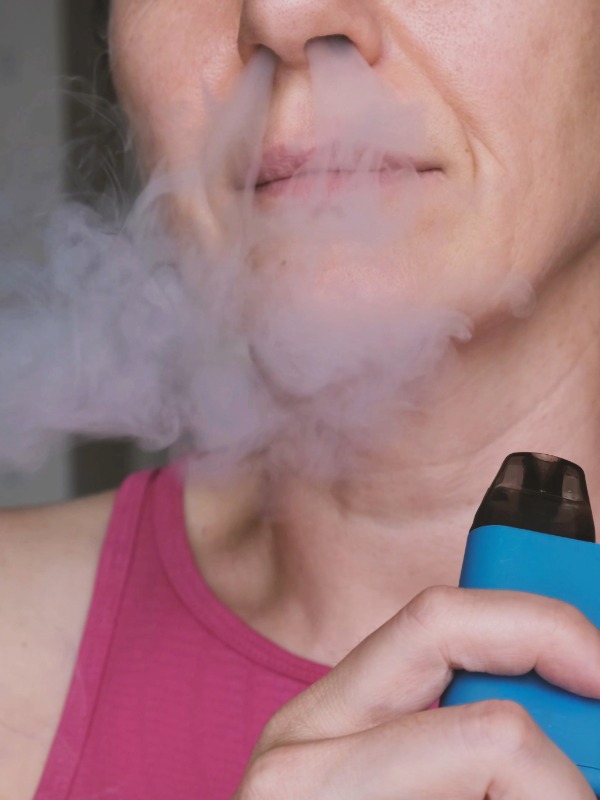
Vaping & Your Skin: What the Research Is Beginning to Reveal
At Skinportant Clinic, we believe in clear, evidence-led guidance that supports long-term skin health. While vaping is often viewed as a “safer” alternative to smoking, emerging research suggests it may still have meaningful effects on the skin — particularly when it comes to circulation, healing, and inflammation.
Here is what current science is beginning to show.
Reduced Oxygen Delivery: Why Your Skin May Notice
Human studies show that vaping, particularly with nicotine or higher-powered devices, can temporarily reduce oxygen delivery to the skin for up to an hour after use. Oxygen is essential for efficient repair, collagen production, and that healthy post-treatment glow clients love to see.
Just had a facial? Your skin might not love a vape straight after.
After a facial, your skin is in repair mode and relies on good circulation and oxygen to calm, hydrate, and glow. Vaping straight after may temporarily reduce oxygen delivery and microcirculation — potentially dulling that fresh post-treatment radiance and slowing optimal recovery.
This effect becomes even more relevant after advanced treatments that deliberately stimulate controlled inflammation to trigger renewal.
Circulation & Healing: A Key Consideration After Advanced Treatments
Research indicates that nicotine-containing vaping can impair microvascular function — the tiny blood vessels responsible for delivering oxygen and nutrients to the skin. When circulation is disrupted, the skin’s ability to repair efficiently may also be affected.
For this reason, we advise avoiding vaping for at least 24–48 hours after treatments such as microneedling, radiofrequency (RF), nanoneedling, and IPL. During this window, the skin is actively repairing and regenerating, and optimal blood flow and oxygenation are essential for achieving the best results and reducing the risk of prolonged redness or slower recovery.
Supporting the skin during this healing phase can make a noticeable difference to treatment outcomes over time.
Skin Reactions: When Vaping Shows Up on the Surface
Dermatology literature has reported contact-related skin reactions linked to vaping devices and e-liquids. These reactions often appear in predictable patterns, such as irritation on the hand holding the device or sensitivity around the lips and lower face. Potential triggers include nickel in device components, propylene glycol within e-liquids, and certain flavourings that can act as irritants or allergens.
For clients experiencing unexplained localised irritation, vaping should be considered as a possible contributing factor alongside other lifestyle and environmental influences.
Residue Exposure: It Doesn’t Simply Disappear
Exhaled vape aerosol can settle on fabrics, surfaces, and even the skin, creating ongoing low-level exposure after vaping has stopped. This residue contact may contribute to irritation or inflammatory responses in more reactive or barrier-impaired skin types, particularly when exposure occurs indoors on a regular basis.
Inflammation & Oxidative Stress Beneath the Surface
Laboratory studies using human skin cells have shown that exposure to certain e-liquid chemicals can increase oxidative stress and inflammatory signalling. These processes are associated with collagen breakdown pathways and longer-term skin ageing mechanisms, even before visible changes appear on the surface.
Skin Ageing: An Emerging but Important Conversation
There is strong, long-standing evidence that smoking accelerates skin ageing. For vaping, long-term clinical data is still limited, but early research highlights overlapping pathways such as oxidative stress, inflammation, and altered circulation. This suggests vaping may not be neutral for skin ageing, even if the full long-term impact is still being established.
The Skinportant Perspective
Vaping may be used as a harm-reduction tool for smokers, but from a skin-health perspective it is unlikely to be impact-free. Current evidence points towards potential effects on oxygenation, circulation, healing capacity, and inflammatory signalling — all key processes that influence skin quality and treatment results.
Being mindful of vaping, particularly around the time of professional skin treatments, is a simple but important step in supporting calm, resilient, and radiant skin long term.
Sources
Differential Effects of E‑Cigarette on Microvascular Endothelial Function (randomised crossover trial, 2018).
High-wattage vaping and transcutaneous oxygen tension / physiologic effects (randomised trials, 2019).
Association of vaping and smoking with decreased random flap viability in rats (2019).
Vaping-associated decreased VEGF expression and microvessel density in rat wound-healing tissue (2021).
E‑cigarette fluids and aerosol residues causing oxidative stress and inflammatory responses in keratinocytes and 3D skin models (2021).
Exhaled aerosol residue chemical deposition in real-world field sites (2019).
Randomised clinical trial: nicotine vaping increases thrombogenicity and impairs microvascular function (2023).
Hand microcirculation study with nicotine vs nicotine-free vaping (2018).
Cross-sectional study: premature microvascular dysfunction in regular e-cigarette users and duration effects (2024).
Cross-sectional survey: parental e-cigarette use and paediatric atopic dermatitis (2024).
Systematic review: electronic cigarettes in dermatology (2024).
Propylene glycol contact dermatitis evidence syntheses (2018–2023).
Dermatology public guidance on nickel/e-cigarettes and contact dermatitis patterns.
Official and regulatory overviews informing constituents/emissions variability (EU SCHEER opinion; UK COT report; metals risk assessment; carbonyl studies).
Primary smoking–skin ageing evidence used for comparison (collagen synthesis/ECM turnover; MMP‑1 expression; twin studies).
Smoking and wound healing synthesis used for nicotine-only comparison context.
Pregnancy guidance statements used for vulnerable-population context (NHS; ACOG; ASH; Mayo Clinic).