Social media has turned skincare into one of the most manipulative industries on the internet. Influencers — most of whom have zero professional training — are paid to make you feel like your skin is a problem, then sell you the solution. Brands like COSRX and Laneige have spent billions engineering viral moments that feel organic but are carefully orchestrated marketing. The result? People are panic-buying products that damage their skin barrier, comparing themselves to filtered and AI-generated faces, and developing real anxiety around normal, healthy skin. The fix isn't another serum. It's getting off the feed and talking to someone who actually knows your skin.
Sources:

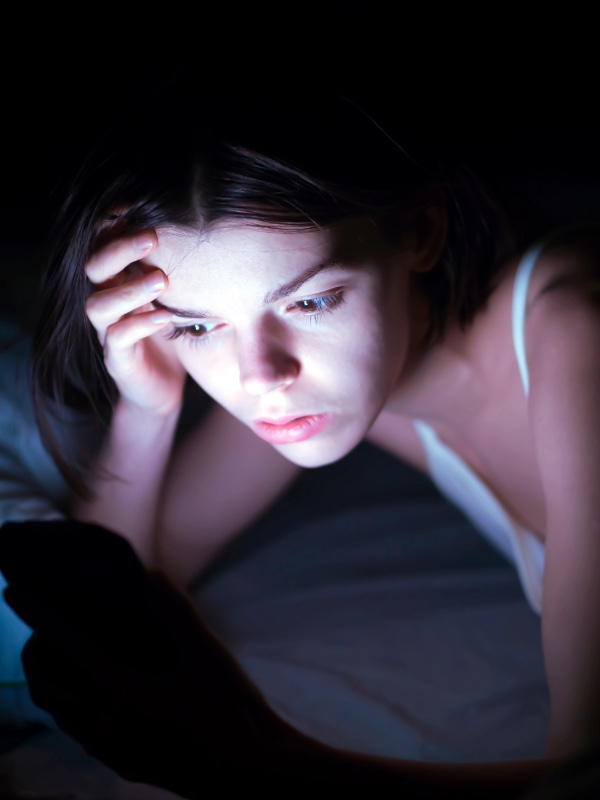
There's a moment that has become almost universal. You're scrolling through Instagram or TikTok late at night, and you land on a video. A person with impossibly smooth, luminous skin is telling you — with the warmth and familiarity of a close friend — that their skin used to look just like yours. Maybe worse, actually. And then they found this serum. This routine. This $47 snail mucin essence. And everything changed.
You feel the pull. You open a new tab. You add it to cart.
This is not an accident.
The global influencer marketing industry was worth $24 billion in 2024, projected to hit $32.55 billion in 2025. Skincare alone accounts for a massive chunk of it — the global skincare market is expected to reach $177 billion by 2025, with skin care projected to represent 40% of the entire beauty sector's value by 2030.
These are not passive numbers. They represent an enormous, coordinated effort to make you feel like your skin is a problem that needs solving — and that the solution is always one product away.
The tactics are not subtle once you know how to look for them. Influencers use before-and-after images, time-limited product drops, viral challenges, and "honest" confessionals designed to feel unscripted. They create what psychologists call parasocial relationships — the sense that you know this person, that they are a friend sharing something real, not a paid spokesperson reading from a brand brief. Research confirms that this perceived intimacy is central to why influencer recommendations work: it's not just about the product, it's about the trust, and trust is the thing the industry is really selling.
What makes this especially manipulative is the invisibility of the transaction. A CBS News review of 240 recent skincare posts from a dozen popular teen influencers on TikTok found that only 6% of posts were tagged as promotional content. Brands routinely ask influencers to skip the #ad label and call the arrangement a "partnership" instead. The FTC requires clear, unavoidable disclosure for paid content — but enforcement lags far behind the volume of violations.
Social media doesn't just sell products. It sells urgency.
When a product goes viral — and this is engineered, not organic — the message is clear: everyone else already knows about this. Everyone else is already using it. If you wait, you'll be left behind. Brands deliberately create limited editions and artificial scarcity to amplify this pressure. The result is what researchers call FOMO-driven panic buying: purchasing not from genuine need, but from fear of missing out on a solution to a problem you may not have had an hour ago.
A 2025 study found that 34% of shoppers purchased a viral or trending skincare product in the past year — up from just 17% in 2024. Among Gen Z and millennials, those numbers climb to 40% and 39% respectively. These are people not buying because a skincare professional identified a concern and recommended a treatment. They're buying because an algorithm served them a video at exactly the moment their defenses were down.
The irony is that this panic buying can actively harm the skin it's supposed to help. Skincare professionals have noted a steep rise in clients — particularly teenagers — presenting with irritated, sensitized, or barrier-damaged skin from layering too many active ingredients. Retinols, glycolic acids, niacinamides, and peptides purchased separately from different viral recommendations are being applied together without any understanding of interactions. A less-is-more approach is what most skincare professionals recommend. The influencer economy does the exact opposite.
Social comparison is not new. But social media has industrialized it, made it constant, and crucially — made the targets of comparison not real.
Platforms like Instagram and TikTok are powered by images that are filtered, edited, lit by professional ring lights, retouched, and in many cases generated by AI. Scrolling through them triggers what social psychologists call upward social comparison — measuring yourself against someone who appears to be doing better. Research shows this reliably reduces self-esteem and increases body dissatisfaction. One meta-analysis found that exposure to upward comparison targets on social media consistently produced negative effects on self-evaluations and mood, with women and adolescent girls being disproportionately affected.
For skin specifically, this has produced a new clinical phenomenon. Skin care professionals are increasingly documenting what researchers now call social media dysmorphia — a distorted perception of one's own appearance caused not by an internal disorder, but by constant comparison to digitally constructed ideals. The skin concern version of this is sometimes called "skin dysmorphia": a growing tendency to perceive normal skin — with its pores, texture, redness, and variation — as a defect.
The term "Snapchat dysmorphia" entered the professional lexicon years ago to describe patients bringing filtered selfies to cosmetic consultations, asking practitioners to make their faces look like the filtered version. Skincare professionals are now experiencing the same thing. A 2025 study published in the Journal of Cosmetic Dermatology noted that "social media dysmorphia describes body-image disturbances that emerge from external digital influences shaped by filters, editing tools, and social comparisons." Research found that over four hours of daily social media use correlates with significantly higher dysmorphic concern scores, particularly on image-based platforms.
Here is something the skincare industry understood before almost anyone else: authority is not about credentials. It's about presence and familiarity.
A certified skincare professional sees you a handful of times a year, for a focused consultation. An influencer is in your phone every single day. They use your vocabulary. They have the same concerns you do, or at least they perform having them convincingly. When they say "this changed my skin," it doesn't feel like advertising — it feels like testimony.
A 2023 study found that only 38% of Instagram accounts producing popular skincare content are healthcare professionals, and clinically certified skin specialists account for just 4%. That means 96% of the most-seen skincare content on Instagram is coming from people with no formal training. Yet the format — the confident tone, the aesthetic, the "as someone who struggled with acne" framing — mimics the credibility of expertise without requiring any.
This matters because influencers are not bound by the same ethical constraints as trained skin care professionals. They can recommend products they've never researched, that contain ingredients inappropriate for the audience they're speaking to, and that have been paid for by brands they don't disclose. Skin care professionals have reported a wave of clients — including children — arriving with rashes and chemical irritation from products bought after watching TikTok videos. In one documented case, a 9-year-old developed a rash from a glycolic acid cleanser recommended by a creator who presented themselves as a skincare authority.
It's worth noting that when people do consult a skincare professional, the trust is there — one study found 81% of patients highly trusted their skincare specialist, and 97% said they would follow professional advice over a contradicting influencer. The problem is that most people never make that appointment. They self-diagnose and self-prescribe using their feeds.
No sector illustrates influencer-driven manipulation more precisely than the Korean skincare industry.
K-beauty was already well-established in South Korea, built on sophisticated formulations, multi-step routines, and a cultural emphasis on skin health. What happened internationally was different: it was a coordinated marketing campaign disguised as an organic trend.
The numbers are staggering. The global K-beauty market was estimated at $118.28 billion in 2025 and is projected to reach $252.41 billion by 2033 — a CAGR of 10%. K-beauty brands allocated roughly 25% of their marketing budgets to influencer partnerships, with digital advertising now accounting for an estimated 43.7% of total beauty ad spend globally.
The strategy was meticulous. Brands like COSRX sent products to creators at scale, understanding that even without payment, a creator who receives free products is likely to post positively. When COSRX's Snail Secretion Filtrate Essence went viral on TikTok, it wasn't accidental. Creator Mikayla Nogueira's video reviewing the product surpassed 12 million views in five days and helped push COSRX into the top 5 skincare brands on TikTok Shop US. The brand simultaneously ran growth averaging +182% quarterly in the US market.
Laneige built YouTube authority through tutorial content and "honest" reviews from creators who aligned with the brand's aesthetic. The Ordinary created a cult following by wrapping clinical-sounding ingredient names in accessible, democratic language — making consumers feel informed rather than marketed to, which is itself a sophisticated form of marketing.
In one quarter alone, more than 740,000 new short videos about K-beauty were created — a 97% increase quarter-over-quarter. When content proliferates at that scale, it no longer feels like advertising. It feels like consensus.
The psychological toll is real and well-documented.
Research consistently links heavy social media use to increased appearance anxiety, lower self-esteem, and higher rates of body dissatisfaction. For adolescents — the most vulnerable group, and the most targeted by skincare marketing — studies show that skin-related social media content specifically amplifies self-image concerns, with female and gender-diverse young people at particular risk. One study found that adolescents were more worried about their skin and acne than about their weight — a reversal of the concerns that dominated previous generations.
The physical consequences of this anxiety are no less serious. Skincare professionals report that the most common skin damage they now treat in teenagers is not acne or sun damage — it's over-treated, barrier-compromised skin: redness, peeling, hypersensitivity, and breakouts caused by layering too many active ingredients bought from viral recommendations. The marketing sells the solution. The solution creates the new problem. The new problem requires more products.
There is a clinical term for this cycle in the context of mental health: skin-picking disorder and excoriation, conditions that can be triggered and worsened by hyper-focus on perceived imperfections. Among people seeking professional skin consultations, rates of appearance-related anxiety are significantly higher than in the general population — and that figure almost certainly undercounts those experiencing subclinical versions of the same distress.
The system is not neutral. It is built to make you feel inadequate, move fast, spend money, and never quite feel like you've caught up. And it works — not because you're gullible, but because billions of dollars have been spent making it work on you specifically.
The products you've been panic-buying may be doing nothing. Some are actively damaging your skin barrier. The "problems" you've been trying to fix were identified for you by someone being paid to identify them. That is worth being angry about.
Real skin care is not a 47-step routine assembled from TikTok recommendations. It's understanding what your skin actually needs — which is different for every person, and something no viral video can tell you.
If you've been chasing solutions online and your skin still isn't where you want it to be, that's not a failure on your part. It's exactly the outcome the industry is designed to produce. The answer isn't another product. It's a real conversation with someone who can actually look at your skin.
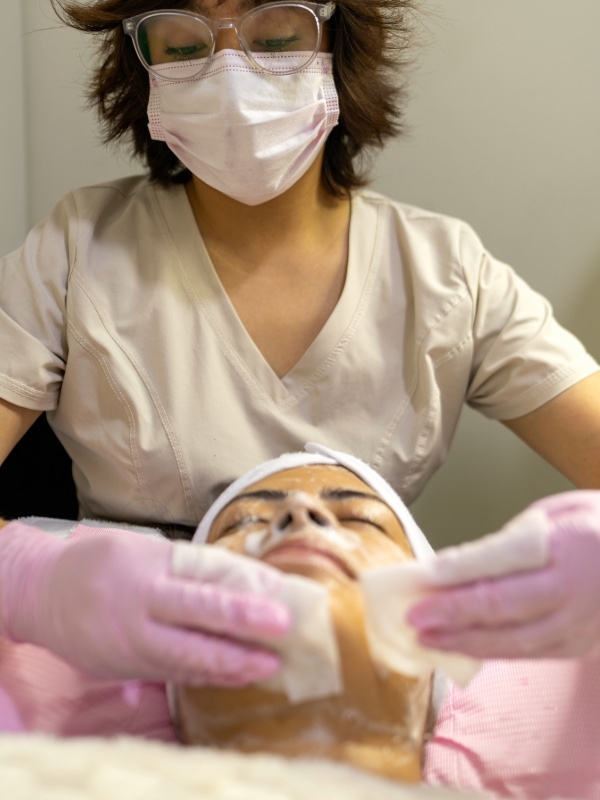
If your need helpp with your skin book a facial or a consultation with us at Skinportant. We'll cut through everything you've been sold and focus on what your skin genuinely needs — not what an algorithm decided you should be worried about.
It is one of the most Googled skincare questions there is. And the answer you will find most often is a number — SPF 30, or SPF 50 — with little explanation of why, or what conditions that recommendation actually applies to. The truth is more interesting, and more actionable, than a number alone. At Skinportant Clinic, we work with clients who are investing seriously in their skin — through professional treatments, prescriptive skincare, and consistent routines — and we regularly see that effort undermined by misunderstanding, misapplying, or skipping SPF altogether. This is our complete guide to getting it right.

Most people assume that if a product looks right, is priced normally, and arrives from a platform they use every day, it is genuine. That assumption is costing people their skin — and in some cases, exposing them to substances that have no business being anywhere near a human face. This blog is not about obvious fakes sold at suspicious prices. It is about what is routinely being sold on Amazon, eBay, and TikTok Shop under trusted brand names, what has been found inside those products when tested, and why — particularly if you are undergoing skin treatments — the source of your skincare matters more than you may have realised.

Some treatments make your skin look better for a day. Peptides change what your skin is actually capable of. They are the messengers your skin already uses to regulate itself — stimulating collagen, repairing structure, calming inflammation, and addressing ageing at its source rather than masking it at the surface. They work at a cellular level, which is why the results are structural and lasting. Understanding how peptides work changes how you think about skincare entirely.

Most skin ageing doesn’t come from sunburn — it comes from daily, invisible exposure. UVB affects the surface and causes burning, which is why people notice it. UVA penetrates deeper, damaging collagen and causing wrinkles, pigmentation, and loss of firmness without any warning signs. It is present all year, even indoors through windows. SPF mainly protects against UVB, so without proper broad-spectrum protection, ageing continues beneath the surface. Over time, it’s not holidays but small, repeated daily exposures that drive skin ageing. UVB burns you. UVA ages you — quietly, every day.