What's Really Inside That Bottle You Ordered From Amazon
Most people assume that if a product looks right, is priced normally, and arrives from a platform they use every day, it is genuine. That assumption is costing people their skin — and in some cases, exposing them to substances that have no business being anywhere near a human face. This blog is not about obvious fakes sold at suspicious prices. It is about what is routinely being sold on Amazon, eBay, and TikTok Shop under trusted brand names, what has been found inside those products when tested, and why — particularly if you are undergoing skin treatments — the source of your skincare matters more than you may have realised.
What's Really Inside That Bottle You Ordered From Amazon
It Started With a Photograph
What Is Actually Inside Those Bottles
How Common This Actually Is
If You Are Having Skin Treatments, Read This Carefully
The Only Way to Be Certain
The Skinportant Clinic Perspective
Final Thought
Written By: Adrienne Nemeth
May 15, 2026
It Started With a Photograph
Our client had done almost everything right.
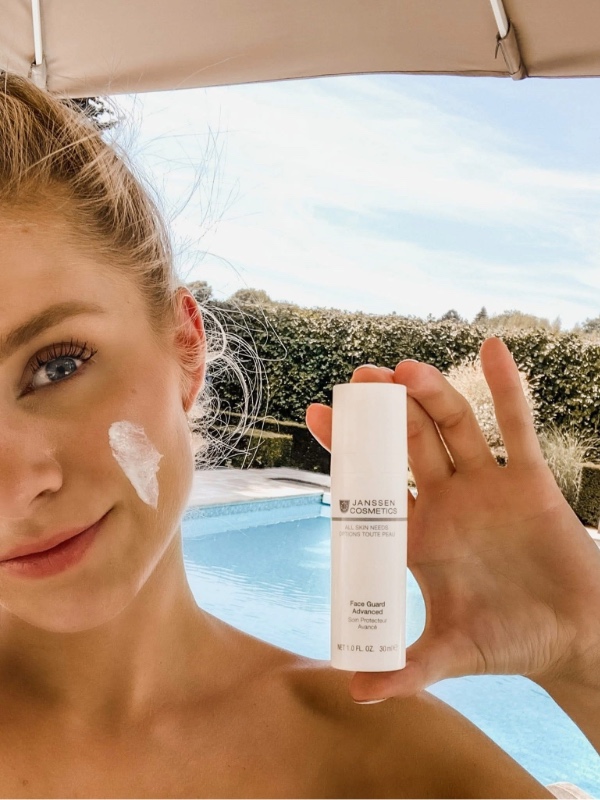
Completed her IPL treatment. Followed every aftercare instructionbut one. Regardless of our product recommendation bought her SPF online, on a platform she used every day, at a price that seemed entirely normal. She sent us a photograph before using it — not because she was worried, but because she was careful.
That photograph is the only reason we caught it.
The picture on the box the was slightly different than it should be. It lacked sharpness. Everything else — the brand, the packaging, the SPF rating — looked exactly as it should.
It was a fake. A counterfeit sold by a third-party seller on Amazon, designed to be indistinguishable from the real thing. And it very nearly was.
Without that photograph, she would have applied it every morning, stepped outside believing she was protected, and never once suspected that what was inside the bottle had nothing to do with what was printed on the label.
We started looking into how common this is, and what is actually inside these products. What we found is not easy to read.
What Is Actually Inside Those Bottles
This is the part most people do not know about — and the part that changes how seriously you take this.
When counterfeit cosmetics are seized and sent for laboratory testing, what analysts find inside them is not simply a cheaper or weaker version of the real formula. It is something else entirely.
Testing of counterfeit makeup has found lead at levels fifteen times higher than in the genuine product. Arsenic. Mercury. Beryllium. Cadmium. Known carcinogens — substances classified by health authorities as probable or confirmed causes of cancer — present in products people are applying to their faces every day.
It does not stop there. Confiscated counterfeit cosmetics have been found to contain bacteria and fecal matter, the result of being manufactured in completely unsanitary conditions with no regulatory oversight whatsoever.
These are not products that simply fail to deliver results. These are products that, applied to the skin repeatedly over time, can cause allergic reactions, chemical burns, chronic irritation, eye infections, and exposure to substances with serious long-term health implications.
The bottle looks like your usual SPF. The texture might even feel similar. But when no one is checking what goes into it, anything can.
How Common This Actually Is
The scale of what is happening on these platforms is not a fringe issue.
In 2025, consumer watchdog Which? purchased beauty products from major online marketplaces and had them assessed. Two thirds were likely counterfeit.
SkinCeuticals — a respected skincare brand — investigated their own products being sold through Amazon third-party sellers.
More than 99% were fake.
Not a minority. Not a handful of suspicious listings. NINETY-NINE percent of that brand's presence on that platform was counterfeit or contaminated.
Since March 2020, skincare brands have reported an 85% increase in counterfeit products. In 2024 alone, Amazon seized over 15 million counterfeit beauty products. That is what was caught before it reached someone's door. The amount that was not caught is unknown.
Amazon, eBay, and TikTok Shop invest in fighting this. They are genuinely trying. But the problem is growing faster than the solutions, and the products slipping through are landing in bathroom cabinets across the country — in the hands of people who have no reason to doubt them.
If You Are Having Skin Treatments, Read This Carefully
Picture this.
You are two weeks into your IPL recovery. You have been meticulous — no direct sun, SPF every morning without fail, everything we advised. You feel confident. You go about your day.
But the SPF you have been applying every morning contains no active UV filters. The bottle is convincing. The label says SPF 50. What is inside is something else — something unregulated, unverified, and untested on human skin.
Your skin is completely unprotected. And you have absolutely no idea.
After treatments such as IPL, laser, or microneedling, the skin is in a sensitised, reactive state. The melanocytes — the cells responsible for producing pigment — are particularly vulnerable during this recovery window. Unprotected UV exposure at this stage does not simply slow your progress.
It can trigger rebound hyperpigmentation — pigmentation returning darker than before your treatment began. It can cause post-inflammatory hyperpigmentation, producing new areas of discolouration on already healing skin. It can cause burning and, in more serious cases, permanent changes to skin tone that no subsequent treatment can fully correct.
Every session. Every week of careful aftercare. Every morning you reached for that bottle believing you were doing the right thing.
Undone — not through carelessness, but through trust in a platform that did not deserve it.
And now consider that the product may also contain lead, bacteria, or substances that should never come near sensitised skin. The risk is not simply that it does not protect you. It is that it may actively harm you while you believe it is helping.
The Only Way to Be Certain
There is no reliable way to identify a counterfeit by looking at it. That is the entire point. The fakes that reach people are the ones that passed inspection.
The only way to be certain a product is genuine is to control where it comes from.
Buy through your clinic. When we stock a product at Skinportant, we know exactly where it has come from. The recommendation and the product come from the same trusted source. That is the point.
Buy directly from the brand's official website. If a brand sells online, their own website is the only place where the supply chain is entirely within their control.
Buy from an authorised stockist. Most reputable skincare brands publish a list of approved retailers. If a seller is not on that list, there is no way to verify the product is genuine.
If you have already purchased something from Amazon, eBay, or TikTok Shop, compare the packaging carefully against the brand's official website. Font that is not quite right, a logo that lacks sharpness, a texture or scent that differs from what you remember — these are signs worth acting on. And if you are unsure, bring it in or send us a photograph. That is exactly what our client did, and it is exactly why we were able to catch it before it caused harm.
The Skinportant Clinic Perspective
The products we recommend to clients are chosen carefully — for their formulation, their concentration of active ingredients, and the evidence behind them. When we hand a product to a client, or direct them to purchase it, we are confident in what it is and where it has come from.
A counterfeit version of that product shares none of those properties. The label is familiar. The contents are unknown. And in the worst cases, as the testing data shows, what is inside could cause real harm to real skin — particularly skin that is in a sensitised, post-treatment state and relying on those products to protect its recovery.
We understand that online shopping is convenient, and that platforms like Amazon have become a default for purchasing almost everything. We are not asking you to avoid them entirely. We are asking you to make one exception — and to apply a little more consideration to what goes onto your skin than to what goes into your shopping basket.
Because unlike most things that disappoint when they turn out to be fake, this one has consequences you may not see until the damage is already done.
Final Thought
Fifteen times the lead. Arsenic. Fecal matter. Carcinogens. In products sold under trusted brand names, at normal prices, on platforms used by millions of people every day.
Two thirds of beauty products bought from online marketplaces may not be genuine. Ninety-nine percent of one of the world's most trusted clinical skincare brands was found to be counterfeit on a single platform.
This is not a rare risk. It is a common one, happening quietly, to people who had every reason to believe they were buying the real thing.
Your skincare routine only works if what you are using is actually what it claims to be. Buy from the brand directly. Buy from an authorised stockist. Buy from your clinic.
Anything else is a risk your skin should not have to take.
Share this article:
What can you do?
READ MORE
5 Questions to Ask Before You Buy Another Product
Beautiful packaging and confident marketing claims don't tell you whether a product will actually change anything about your skin. Most people are buying based on how a product looks, smells or is marketed — not on whether it does what it says. Here are five questions that separate a product worth your money from one that's just well packaged, and why professional advice matters more than the price on the label.
Sleep deprivation doesn't just leave dark circles and a tired-looking face. Research shows it measurably weakens the skin barrier, slows overnight repair, and disrupts the exact hormones responsible for keeping skin firm and clear — often after just one bad night. We saw the full effect of this in a client whose worsening skin had nothing to do with the products she was using, and everything to do with what was happening in her bed at 2am. Here's the research behind why sleep matters as much as anything on your bathroom shelf.
Holiday Skin: What to Do Before, During, and After Your Trip
Every summer, people spend more time choosing a swimsuit than thinking about their skin — and sunscreen packaging is happy to let them believe "water-resistant" means waterproof and once is enough. It isn't, and it's not. Most people apply less than half the sunscreen they need, reapply half as often as they should, and land back home two weeks later with pigmentation that has nothing to do with how much fun they had and everything to do with a bottle applied wrong. The fix isn't a higher SPF number, and it isn't another product either. It's applying enough, reapplying on a schedule instead of a feeling, and knowing when what's left behind after summer needs someone who actually knows your skin — not another six months of hoping it fades.
How Social Media Is Destroying Your Skin (And Making You Pay For It)
Social media has turned skincare into one of the most manipulative industries on the internet. Influencers — most of whom have zero professional training — are paid to make you feel like your skin is a problem, then sell you the solution. Brands like COSRX and Laneige have spent billions engineering viral moments that feel organic but are carefully orchestrated marketing. The result? People are panic-buying products that damage their skin barrier, comparing themselves to filtered and AI-generated faces, and developing real anxiety around normal, healthy skin. The fix isn't another serum. It's getting off the feed and talking to someone who actually knows your skin.


.webp)