What SPF Actually Measures
SPF stands for Sun Protection Factor. SPF measures how much UVB radiation is required to produce redness on protected skin compared with unprotected skin under laboratory conditions.
The critical word is UVB. SPF measures UVB protection only — and UVB is only one part of the UV spectrum.
UVB rays — B for Burn — are shorter wavelength rays responsible for sunburn, surface damage, and a significant proportion of skin cancer risk. They are strongest between 10am and 4pm, and most intense in spring and summer.
UVA rays — A for Ageing — operate differently. They penetrate far deeper into the dermis, degrading collagen and elastin, driving pigmentation, and ageing the skin from within. They are present at consistent levels year-round, from sunrise to sunset, and — critically — they pass through glass. The SPF number tells you nothing about how well you are protected from UVA.
This is why broad-spectrum protection is non-negotiable. Always confirm your sunscreen is labelled broad-spectrum. Without it, the SPF number is only telling you half the story.
More recently, researchers have also explored the role of infrared radiation and high-energy visible blue light in pigmentation and collagen degradation. While UV remains by far the primary driver of photoageing, these additional environmental factors may contribute to skin ageing and pigment formation through separate but overlapping pathways.
SPF 30 vs SPF 50 — Does the Difference Matter?
The gap is smaller than most people assume.
SPF 30 blocks approximately 96.7% of UVB radiation. SPF 50 blocks approximately 98%. That is a relatively small difference in absolute terms, and both provide excellent protection when applied correctly.
The reason many practitioners lean toward recommending SPF 50 is not necessarily because the number itself delivers dramatically better protection, but because most people apply less than the required amount. Since SPF ratings are determined using a specific application density, under-application significantly reduces real-world protection. SPF 50 therefore provides a slightly larger margin for error when product is under-applied.
The honest conclusion: a correctly applied SPF 30 provides excellent daily protection for most people. What matters far more than which number you choose is how much you apply and how regularly you reapply it.
Do You Need SPF Indoors?
This surprises many clients. The answer is yes — particularly if you sit near a window, drive regularly, or spend significant time indoors during daylight hours.
Standard glass blocks most UVB radiation but still allows a large proportion of UVA to pass through. Since UVA is the primary driver of photoageing and pigmentation, sitting at a window-facing desk or commuting by car exposes your skin to cumulative UV radiation that compounds over days, weeks, and years. The asymmetric facial ageing observed in long-distance drivers — more pronounced on the side facing the window — is well documented.
Applying SPF every morning as the final step of your skincare routine protects you from this cumulative exposure without requiring any additional thought. This is why daily sunscreen use matters even during winter and even when spending most of the day indoors.
Blue Light, Infrared, and the Screen Worker’s Skin
Most people think about sun protection only when they are outdoors. But emerging research suggests that prolonged exposure to high-energy visible blue light and infrared radiation may also contribute to pigmentation and collagen degradation — particularly in individuals already prone to melasma or post-inflammatory hyperpigmentation.
Blue light is emitted not only by sunlight but also by digital devices such as phones, laptops, and monitors. While screen exposure is significantly lower than sunlight exposure, some studies suggest blue light may stimulate melanogenesis through pathways separate from UV radiation. This effect appears to be more relevant in skin types III and above and in clients managing pigmentation disorders.
Infrared radiation has also been investigated for its potential role in oxidative stress and collagen breakdown. While UV remains overwhelmingly the most important environmental factor in skin ageing, infrared exposure may contribute to cumulative skin stress over time.
Standard sunscreens are designed primarily to protect against UV radiation. Tinted SPF products containing iron oxides may provide additional defence against visible light, while mineral filters such as zinc oxide and titanium dioxide may offer broader environmental protection within hybrid formulations.
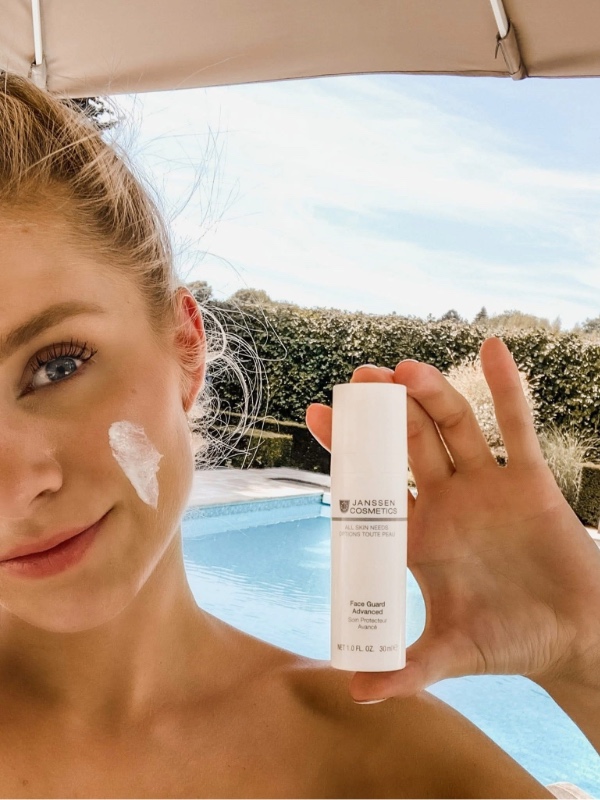
This is one reason formulations such as the Janssen Cosmetics Face Guard Advanced combine mineral filters with antioxidant and heat-protective ingredients designed to support the skin against multiple environmental stressors.
How Much to Apply — and Why Most People Get This Wrong
The SPF rating on your sunscreen is determined under laboratory conditions using an application density of 2mg per square centimetre of skin. For the face and neck combined, that equates to approximately a quarter to half a teaspoon — considerably more than the average person applies.
Studies consistently show that most people apply between 20% and 50% of the required dose. At half the recommended amount, protection drops dramatically. This is also why a full application of SPF 30 often outperforms an under-applied SPF 50 — the number on the bottle only reflects what the product can do at the correct dose.
A practical guide: use two full finger-lengths of product for the face and neck combined. Cover the entire face including the hairline, sides of the nose, around the eyes, behind the ears, and the full length of the neck. The backs of the hands are frequently overlooked — an area that accumulates significant UV and environmental exposure and often shows early visible signs of ageing.
How Often to Reapply
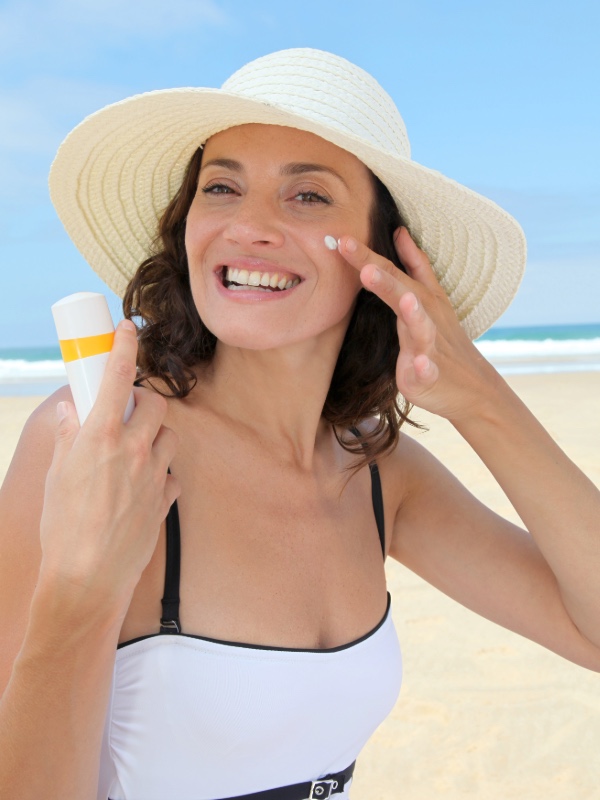
Outside, in direct sun or at the beach, UVB exposure is at its highest and the risk of burning and cumulative skin damage is greatest. Apply a broad-spectrum SPF generously and reapply every two hours — that matters far more than whether you choose SPF 30 or SPF 50.
Inside, particularly during prolonged screen time or daylight exposure near windows, daily sunscreen still plays an important role in protecting against cumulative UVA exposure and supporting pigmentation management. A broad-spectrum SPF with modern UV filters, antioxidants, and — where appropriate — iron oxides can provide more comprehensive environmental protection.
Mineral vs Chemical Sunscreen
Mineral sunscreens use zinc oxide and titanium dioxide. These sit on the surface of the skin, attenuating UV through absorption and scattering. They are photostable, have an excellent safety profile with minimal systemic absorption, and are particularly well suited to sensitive, reactive, or post-treatment skin. They are also the filter type most associated with broader protection against visible and infrared-related environmental stressors.
Chemical sunscreens use synthetic organic molecules that absorb UV photons and convert the energy into heat. They produce lighter, more cosmetically elegant textures and often integrate more seamlessly under makeup.
Many modern facial sunscreens combine both filter types. The Janssen Cosmetics Face Guard Advanced uses this hybrid approach, combining mineral protection alongside modern photostable UV filters in a lightweight formula with no white cast. It also includes antioxidant and heat-protective ingredients designed to support the skin against environmental stressors beyond UV exposure alone.
Why Your Face Needs Its Own SPF
The skin on your face is physiologically distinct from body skin — thinner, more reactive, more vascularised, and with a significantly higher density of sebaceous glands. Body sunscreens are formulated for durability and large-surface coverage, and are often heavier, more occlusive, and contain fragrance and emollient concentrations not calibrated for facial skin.
Applying a body sunscreen to the face regularly — particularly if you are prone to breakouts — risks congestion, irritation, and comedone formation. Always use a formulation designed specifically for the face.
SPF for Acne-Prone and Oily Skin
This is the reason many clients abandon SPF altogether. The solution is not to stop wearing it — it is to find the right formulation.
For acne-prone skin, look for non-comedogenic, oil-free, or water-based textures. Mineral UV filters — particularly zinc oxide — also offer anti-inflammatory properties that can be beneficial in acne-prone skin. Mattifying ingredients such as silica or kaolin help manage excess oil throughout the day.
Avoid heavy emollients including coconut oil, lanolin, and beeswax, and keep fragrance away from inflamed or broken skin. If breakouts are occurring alongside SPF use, the issue is often formulation compatibility or the wider skincare routine rather than the sunscreen itself.
Does Darker Skin Still Need SPF?
Yes — absolutely. Melanin provides some natural UV attenuation equivalent to approximately SPF 8–13 in deeper skin tones, but this is not adequate for sustained UV exposure and provides limited defence against UVA.
For clients with deeper skin tones, pigmentation and post-inflammatory hyperpigmentation are often the primary concerns. Broad-spectrum SPF is central to managing both.
Tinted sunscreens containing iron oxides are particularly valuable because they help protect against both UVA and visible blue light, which may contribute to melanogenesis independently of UV exposure. For anyone managing hyperpigmentation, this can be a meaningful upgrade over standard untinted SPF formulations.
Can Makeup with SPF Replace Your Sunscreen?
No — and this remains one of the most common misconceptions in skincare.
The SPF value on foundation, BB cream, or tinted moisturiser is measured using the same testing density as sunscreen. The amount most people actually apply delivers far less protection in practice.
Makeup with SPF is best viewed as an additional layer of protection on top of a properly applied sunscreen, not as a replacement for one.
SPF and Ageing — The Clinical Evidence
Approximately 80–90% of visible facial ageing is attributable to UV exposure rather than chronological ageing alone. Every unprotected UV exposure activates matrix metalloproteinases — enzymes that break down collagen and elastin responsible for skin firmness and elasticity.
A landmark randomised controlled trial found that daily broad-spectrum sunscreen use reduced visible photoageing by 24% over 4.5 years compared with occasional use. Daily sunscreen remains the single most consistently evidenced anti-ageing intervention available in skincare.
SPF and Pigmentation
For clients managing melasma, solar lentigines, or post-inflammatory hyperpigmentation, SPF is not supportive care — it is foundational treatment.
UV and visible light both influence melanin production through overlapping pathways. Without consistent daily broad-spectrum SPF, brightening and depigmenting treatments face a constant uphill battle.
Sunscreen is the step that allows every other pigmentation treatment to work more effectively.
After Professional Treatments
For any client who has undergone a chemical peel, laser resurfacing, or microneedling, sun protection during the post-treatment period is especially critical.
Post-treatment skin is temporarily sensitised, its barrier is compromised, and melanocytes become significantly more reactive to UV and visible light stimulation. Unprotected exposure during this period can reverse treatment results, trigger hyperpigmentation, prolong healing, and increase inflammation.
Mineral-only formulations are often preferred immediately after treatment due to their minimal irritation profile. Your practitioner will advise on the appropriate product and timing for your skin.
A Few More Questions We Get Asked
Is “waterproof” sunscreen actually waterproof?
No. No genuine sunscreen is permitted to make this claim. The correct term is water resistant, qualified as either 40-minute or 80-minute resistance based on standardised testing. Even an 80-minute formula should be reapplied after towel drying.
Why does my sunscreen pill under makeup?
This is usually a formulation compatibility issue — commonly a silicone-based SPF layered under a water-based primer. Allow your SPF a few minutes to settle before applying further products, and apply foundation using a pressing rather than dragging motion.
Can expired sunscreen still protect?
No. UV filters degrade over time, particularly when exposed to heat. Replace any sunscreen showing changes in smell, texture, or colour regardless of the printed expiry date.
How do I properly remove SPF at the end of the day?
The most important thing is using a quality cleanser suited to your skin type — one that effectively removes sunscreen without stripping the skin barrier. If your skin feels tight, dry, or reactive after cleansing, your cleanser may be too aggressive regardless of how effectively it removes SPF.
Year-Round, Every Day — No Exceptions
UVA exposure continues throughout winter, and environmental stressors do not disappear when summer ends. The case for daily sunscreen is not seasonal, and it is not limited to beach holidays or sunny weather. Daily SPF remains one of the single most effective long-term investments you can make in the health and appearance of your skin.